
B2B Marketing Strategy Framework: Build Pipeline in 90 Days

Account Director



Key Insights
- Most B2B frameworks fail at execution - not because the strategy is wrong, but because there is no structured sequence for building and activating it.
- A four-layer model works - Audience → Messaging → Channel Mix → Measurement - and the order matters as much as the components.
- The 90-day window is real - teams that commit to a phased Foundation → Activation → Optimise sequence consistently outperform those who try to run everything simultaneously.
- AMP removes the coordination overhead - Jam 7's Agentic Marketing Platform® (AMP) executes the framework without the communication drag that slows most B2B marketing teams down.
- Measurement must come first, not last - teams that define their pipeline metrics before campaigns launch are 2x more likely to hit quarterly revenue goals, according to Salesforce.
Most B2B marketing teams don't have a strategy problem. They have an execution problem. The B2B marketing strategy framework exists - in whitepapers, decks and strategy offsite outputs - but somewhere between strategic intent and pipeline, things fall apart. Channels get activated before messaging is clear. Measurement gets bolted on at the end. Sales and marketing use different definitions of "qualified."
This is what we call framework fatigue: the exhausting cycle of building strategies that never fully land. If this sounds familiar, you're not alone. According to Bain's 2025 Commercial Excellence Agenda, turning strategy into action at scale remains the number one execution challenge for B2B growth teams.
The good news is that the fix is structural, not motivational. In this article, we'll walk through the four-layer B2B marketing strategy framework that Jam 7 uses to help ambitious B2B tech teams build predictable pipeline - and the 90-day implementation sequence that makes it real.
Why Most B2B Marketing Frameworks Fail at Execution
The problem isn't ambition - it's sequencing. B2B marketing teams are typically asked to do everything at once: build brand awareness, generate demand, enable sales and report results to the board. Without a clear implementation order, each initiative competes for the same limited resource: focused attention.
Research from Artisan AI (February 2026) puts it plainly: the buyer journey is messy - with buyers conducting research across an average of 62 touchpoints across three or more channels before making a decision. Yet most B2B frameworks still treat the buyer journey as linear and most execution plans still treat channel activation as the starting point.
The result? Demand capture without demand creation. Outreach without a clear message. Campaigns that generate noise but not pipeline. We've seen this pattern repeatedly when working with growth-stage B2B tech teams - the strategy document is strong, but no one owns the build sequence that brings it to life.
Here's the thing: coordination overhead isn't just frustrating - it actively erodes execution speed and consistency, the two things that separate Agentic Teams from everyone else in Jam 7's Growth Quadrant. The framework below addresses this directly by establishing a clear build order. You cannot activate what you haven't defined. You cannot measure what you haven't structured from the start.
The Four-Layer B2B Marketing Strategy Framework (Demand Generation Framework + B2B Go-to-Market Strategy)
The Jam 7 B2B marketing strategy framework is built around four interdependent layers, designed to be activated in sequence.
These layers sit inside a practical demand generation framework for modern teams and map cleanly to a board-ready B2B go-to-market strategy.
- Audience - Who you are targeting and how they make decisions
- Messaging - What you say to them and how it differs by role and stage
- Channel Mix - Where and how you reach them, in what order
- Measurement - How you define success before the campaign starts
Each layer is foundational to the next. Skipping or rushing any layer is the most common reason B2B go-to-market strategies stall after launch.

Layer 1: Audience Targeting - Building Your ICP and Buying Committee Map
The ideal customer profile (ICP) is not a demographic exercise - it is the commercial foundation of every downstream decision. A well-defined ICP specifies not just firmographic criteria (sector, size, revenue, technology stack) but the specific business conditions that make a company ready to buy: a growth trigger, a compliance pressure, a competitive threat.
In 2026, single-persona targeting is no longer sufficient. The buying committee has become the norm in B2B tech decisions. Research consistently shows that enterprise purchase decisions involve between six and ten stakeholders. Your ICP must map not just the economic buyer, but the influencer, the champion, the technical evaluator and the end user - each with different jobs to be done, different objections and different content needs.
Product-market fit validation sits within this layer too. Before any messaging is developed, B2B teams need to confirm that the product solves a pain that is genuinely urgent for the ICP - not just interesting. Jam 7's approach to audience targeting uses AMP's research agents to surface signal data across intent platforms, community discussions (including Reddit r/b2bmarketing) and competitive intelligence to stress-test ICP hypotheses before any budget is committed.
A useful diagnostic: if your sales team regularly disqualifies leads that marketing sends, your ICP definition needs tightening, not your channel mix. Gartner's B2B marketing research confirms that misaligned ICPs are the leading cause of pipeline quality issues in B2B tech companies - not messaging or channel selection.
Layer 2: Messaging Hierarchy - From Positioning to Campaign Copy
Most B2B marketing teams skip directly from positioning to content production. The result is a library of assets that all sound slightly different, none of which land with the force they should.
The messaging hierarchy is the structural layer between your positioning statement and your campaign copy. It works from the top down:
- Core value proposition - the one-sentence answer to "why you, why now"
- Key messages by persona - how the value proposition translates into language that resonates with each buying committee member
- Proof points - the evidence (case studies, data, named outcomes) that makes each key message credible
- Campaign copy - the execution layer where headlines, CTAs and ad copy are drawn from the hierarchy above
Without this structure, brand awareness activities and demand generation campaigns pull in different directions. Sales enablement materials use different language from the website. Competitive positioning shifts with each new hire. The messaging framework solves this by creating a single source of truth that every piece of content - and every agent in the AMP system - draws from.
For B2B SaaS marketing strategy specifically, the hierarchy must also account for the buying committee. The CFO needs ROI framing. The technical evaluator needs integration confidence. The CMO needs strategic alignment. One positioning statement expressed three different ways, all rooted in the same hierarchy. According to the Content Marketing Institute's B2B research, teams with a documented messaging hierarchy are 60% more likely to report content marketing success than those without one.
Layer 3: Channel Mix - Selecting and Sequencing Your Demand Channels (Search Engine Optimisation, Email Marketing, Social Media)
The most common channel mix mistake in B2B demand generation is treating it as a list rather than a logic. Teams select LinkedIn, email, SEO and paid search because those are the channels B2B companies use - not because they've mapped where their specific ICP actually researches decisions.
The ICP-first selection logic works as follows:
- Identify where your buyers research - community forums, social media, LinkedIn, Google, analyst reports, peer networks
- Distinguish demand creation from demand capture - demand creation builds awareness and consideration with buyers who don't yet know they need you; demand capture harvests intent from buyers who are actively searching on search engines
- Select 2-3 primary marketing channels that serve both functions for your target market and support them with owned content
For most B2B tech companies targeting growth-stage buyers, this typically means: LinkedIn (demand creation and ABM), search engine optimisation (demand capture) and outbound email marketing sequences (personalised, ICP-filtered). Each channel should have a defined role, a defined target audience segment and a defined key performance indicator before any creative work begins.
Account-based marketing (ABM) sits within this layer for companies targeting a finite list of named accounts. ABM is not a separate strategy - it is a channel orchestration approach that requires the Audience and Messaging layers to already be in place. Running ABM without a validated ICP and a messaging hierarchy is one of the most common and expensive execution mistakes in B2B demand generation strategy. Our team at Jam 7 found that clients who tried to launch ABM without a completed messaging hierarchy spent an average of six additional weeks in revision loops before campaigns could go live.
In practice, the fastest route to consistent lead generation is to align channel sequencing to the buying committee.
That means prioritising channels where potential customers self-educate, then using email campaigns to progress interest into opportunity.
Layer 4: Measurement Model - Setting the Metrics Before the Campaign
The measurement model is the most frequently misplaced layer in B2B marketing strategy. Most teams treat it as a reporting task - something to configure after campaigns are live. In practice, it must be defined before a single campaign is activated.
Jam 7 uses a three-tier measurement model:
- Pipeline metrics - marketing-sourced pipeline, pipeline coverage ratio, SQL acceptance rate
- Channel performance metrics - cost per MQL by channel, conversion rate by stage, channel contribution to pipeline
- Operational and speed metrics - time to first content asset, campaign launch velocity, coordination overhead cost
The third tier is rarely tracked but often the most revealing. Teams that move slowly between strategy and execution consistently underperform on pipeline - not because their strategy is wrong but because marketing attribution becomes unreliable when the feedback loop is too slow to act on. Research highlights that attribution accuracy is a top-three priority for B2B marketing leaders heading into 2026.
Revenue goals must be translated into marketing metrics before the quarter begins. If the business needs £5M in new ARR and the average deal size is £250K, marketing needs to generate at minimum 3x pipeline coverage - £15M in qualified opportunities - to hit that number. Working backwards from revenue goals into pipeline, then into channel volume, then into activity targets is how marketing becomes a board-ready function, not a cost centre. According to HubSpot's State of Marketing, only 35% of B2B marketers can confidently demonstrate marketing's direct contribution to revenue - which means this is still a significant competitive advantage for teams that get it right.

The 90-Day Implementation Sequence (Predictable Pipeline B2B)
No competitor in this space combines a four-layer strategic framework with a clear build sequence. Here is the phased 90-day implementation approach Jam 7 recommends to build predictable pipeline B2B:
| Phase | Timeline | Focus | Key Milestone |
|---|---|---|---|
| Phase 1: Foundation | Days 1-30 | ICP validation, messaging hierarchy, measurement model design | Signed-off ICP document, messaging matrix, attribution logic agreed with Sales |
| Phase 2: Activation | Days 31-60 | Channel activation, content production, campaign launch | 3 primary channels live, first campaign assets deployed, pipeline tracking operational |
| Phase 3: Measure & Optimise | Days 61-90 | Attribution review, channel optimisation, forecast calibration | First pipeline report delivered to board, channel mix adjusted based on conversion data |
The Foundation phase is non-negotiable. Teams that skip it in favour of faster activation consistently revisit the same strategic questions mid-campaign - wasting both budget and credibility. For a deeper dive into the full 90-day transformation journey, see Your Marketing Brain Scales Infinitely. Your Team Doesn't Have To.
For execution speed and campaign launch velocity specifically, Campaign Management at Speed: How to Launch 3x Faster Without Cutting Quality covers the operational mechanics in detail.
How AMP Executes the Framework Without Coordination Overhead
Every layer of this framework requires cross-functional alignment: Sales, Marketing, Product and Finance must agree on ICP, messaging, pipeline definitions and attribution logic. In most B2B marketing teams, that alignment is managed through meetings, email chains, Slack threads and spreadsheets - a coordination overhead that consumes a disproportionate share of execution capacity.
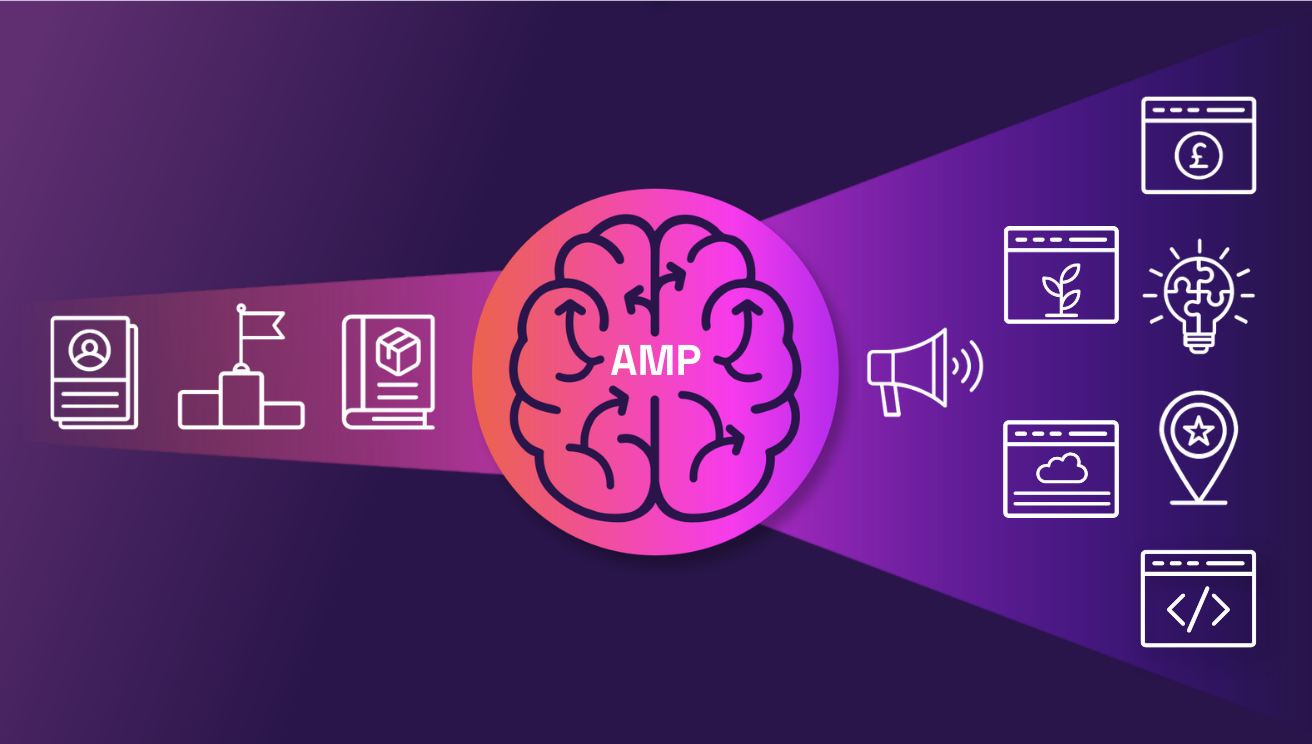
Jam 7's Agentic Marketing Platform® (AMP) is built specifically to remove this overhead. AMP doesn't just execute content - it holds the strategic framework in a centralised knowledge graph, ensuring that every agent drawing from it (research, copy, campaign, QA) works from the same ICP, the same messaging hierarchy and the same attribution model.
The result is what Jam 7 calls the Growth Quadrant outcome: Speed + Consistency = Scale + Credibility. Teams using AMP don't have to choose between moving fast and staying on-brand. The framework is embedded in the platform. Execution becomes systematic rather than heroic.
For teams struggling with the coordination overhead that prevents frameworks from becoming pipelines, The Hidden Cost of Marketing Coordination Overhead is essential reading.
Build the Framework Once. Run It Every Quarter.
A B2B marketing strategy framework is not a document you produce at the start of the year and revisit at the end. It is a living operational system - and the 90-day sequence is designed to be repeated, not completed.
Each iteration refines the ICP, sharpens the messaging, optimises the channel mix and improves the measurement model. Teams that commit to this cadence build what the best B2B marketers describe as a predictable pipeline: not a lucky quarter, but a repeatable engine.
The framework outlined here - Audience → Messaging → Channel Mix → Measurement - combined with the phased 90-day build sequence, gives B2B tech teams the structural foundation to stop reinventing their strategy every quarter and start compounding their results. According to the Directive Consulting GTM Playbook, B2B teams that operate with a documented, repeatable go-to-market framework grow pipeline 40% faster than those working from ad hoc quarterly plans.
Ready to Build Your Predictable Pipeline Engine?
If your team is planning the next 90 days, Jam 7's Agentic Marketing Platform® is built to take you from framework to pipeline - faster, more consistently and without the coordination overhead that slows most B2B marketing teams down.
Book a Discovery Call with Jam 7
Frequently Asked Questions (Marketing Strategy Template B2B)
What are the key components of a B2B marketing strategy framework?
A robust B2B marketing strategy framework comprises four interdependent layers: Audience Targeting (ICP and buying committee definition), Messaging Hierarchy (value proposition through to campaign copy), Channel Mix (demand creation and demand capture channels selected by ICP behaviour) and Measurement Model (pipeline, channel and operational metrics). The order matters as much as the components - each layer must be defined before the next is activated. Most competitors cover individual components in isolation; the structural treatment of all four as a sequenced system is what separates frameworks that generate pipeline from those that gather dust. Forrester's research confirms that B2B buyers engage across an average of six to ten stakeholders, making a committee-aware framework essential rather than optional.
How do you build predictable pipeline in 90 days?
Predictable pipeline is built through three sequential phases. Phase 1 (Days 1-30) focuses on Foundation: validating your ICP, completing the messaging hierarchy and agreeing the measurement model with Sales before any campaign goes live. Phase 2 (Days 31-60) covers Activation: launching 2-3 primary channels with defined roles, deploying content assets and making pipeline tracking operational. Phase 3 (Days 61-90) is Measure and Optimise: reviewing attribution, calibrating the channel mix based on real conversion data and delivering the first board-ready pipeline report. Teams that skip Phase 1 in favour of faster activation consistently revisit strategic questions mid-campaign - at significant cost to budget and internal credibility. The 90-day sequence is designed to be repeated each quarter, compounding results with every iteration.
What is the difference between a marketing plan and a marketing strategy framework?
A marketing plan is a time-bound document: it lists channels, budgets, campaigns and deadlines for a defined period. A marketing strategy framework is the structural logic that informs every plan - the decisions about who you target, what you say, where you reach them and how you measure success.
The framework stays stable across planning cycles; the plan is the quarterly execution layer drawn from it. Most B2B teams have plans but lack the underlying framework, which is why their plans feel inconsistent quarter to quarter and fail to compound over time. Building the framework first - even if it takes an additional two to four weeks - consistently produces stronger quarterly plans and faster pipeline growth.
How do I adapt a marketing plan template for B2B versus B2C companies?
Start by changing what the template optimises for.
B2C templates often assume high-volume transactions, short consideration cycles and creative-led conversion.
A B2B plan must account for a longer sales pipeline, multiple stakeholders and higher scrutiny around proof.
To adapt a marketing plan template for B2B:
- Replace “audience” with buying committee clarity: Define buyer personas by role in the committee (economic buyer, technical evaluator, champion), not only demographics.
- Rewrite objectives around pipeline outcomes: Your marketing objectives should ladder into business goals like qualified pipeline coverage, not just traffic or followers.
- Add sales alignment checkpoints: Include how sales reps will follow up, what “accepted” means, and how handoffs will work.
- Treat content as a conversion system: Plan thought leadership content, blog posts and enablement assets by stage, not by channel.
- Make measurement a first-class section: Add key performance indicators like marketing-sourced pipeline, SQL acceptance rate and customer acquisition cost.
- Use customer data to refine targeting: Segment by company size, intent signals and existing product usage where relevant.
The result is a B2B plan that drives lead generation and revenue outcomes, not only marketing activity.
Can you provide an example of a completed B2B marketing strategy template?
Below is a simplified example of a completed marketing strategy template B2B teams can use as a baseline.
It follows the same Audience → Messaging → Channel Mix → Measurement logic in the framework above.
| Template Section | Completed Example (B2B Tech) |
|---|---|
| Target market + target customers | UK and EU B2B SaaS companies (200-2,000 employees) launching new products, seeking higher market share in a competitive category |
| Target audience + buyer personas | CMO (strategy), VP Sales (pipeline), RevOps (measurement), CTO (integration risk). Buying committee mapped with objections and proof needs. |
| Business goals + marketing objectives | £3M new ARR in two quarters. Marketing objectives: generate £9M qualified pipeline, improve demo-to-opportunity conversion, reduce customer acquisition cost by 15%. |
| Consistent messaging | One core value proposition with role-based message variants and proof points. Guardrails to keep consistent messaging across channels. |
| Marketing channels + sequencing | Demand creation: LinkedIn Ads + thought leadership content + social media distribution. Demand capture: search engine optimisation + high-intent landing pages. Nurture: email marketing and segmented email campaigns. |
| Content plan | 12 blog posts mapped to problem → solution stages, 2 comparison pages, 1 webinar, 3 sales enablement one-pagers, 1 case study update. |
| Measurement + key performance indicators | Pipeline coverage ratio, SQL acceptance rate, CAC, cost per opportunity by channel, content-assisted conversion rate, and speed metrics (time to first asset). |
| Execution ownership | Weekly planning cadence. Growth team owns messaging + content. Paid specialist owns LinkedIn Ads. RevOps owns attribution. Sales reps own follow-up SLA. |
This is intentionally concise.
A real completed template would include budgets, creative briefs, and specific landing page and email campaign assets.
What are common mistakes to avoid when using a B2B marketing plan template?
Most templates fail when teams treat them as a document to “fill in” rather than an operating system.
Common mistakes include:
- Skipping buyer committee detail: A single target audience definition is not enough in B2B. Without buyer personas by role, messaging will drift.
- Starting with channels instead of strategy: Teams lock in marketing channels before they agree the target market and the sales pipeline definition.
- Measuring too late: Key performance indicators get added after launch, when the data is already noisy.
- Optimising for activity over outcomes: The plan lists marketing efforts (posts, ads, events) but does not map them to pipeline stages or business goals.
- No alignment on customer data and qualification rules: Marketing and sales disagree on what a “good lead” is, so lead generation looks strong but conversion collapses.
- Inconsistent messaging across assets: Blog posts, LinkedIn ads, sales decks and email campaigns all tell slightly different stories.
Avoiding these mistakes turns a template into a repeatable growth engine - the kind that compounds quarter after quarter.
How do you choose the right channel mix for B2B demand generation?
Start with your ICP, not a list of channels. Identify where your buyers actively research decisions - LinkedIn communities, Google, analyst reports, peer forums - and map those to demand creation (building awareness with buyers who don't yet know they need you) and demand capture (harvesting intent from buyers who are actively searching). From that mapping, select 2-3 primary channels with defined roles and success metrics and support them with owned content that works across both functions. The mistake most teams make is activating channels based on industry convention rather than ICP behaviour - resulting in a channel mix that reaches the wrong people at the wrong stage of the buying journey. LinkedIn's B2B Institute data shows that over 70% of B2B purchase decisions involve research conducted on LinkedIn at some stage, making it a near-universal channel for B2B demand creation.
How do you align sales and marketing around a shared pipeline framework?
Alignment requires three shared definitions, agreed before any campaign launches: a shared ICP (same firmographic and behavioural criteria for a "good" account), shared pipeline stages (same definition of MQL, SQL and opportunity across both functions) and shared attribution logic (agreed rules for how marketing activity is credited to pipeline and revenue). Without these three agreements, attribution becomes a source of conflict rather than a decision-making tool. The coordination overhead created by misalignment is one of the most significant hidden costs in B2B marketing - see The Hidden Cost of Marketing Coordination Overhead for a detailed breakdown. Gartner research indicates that organisations with tightly aligned sales and marketing functions achieve 24% faster revenue growth and 27% faster profit growth.
What metrics should a B2B marketing strategy framework include?
A framework-level measurement model uses a three-tier structure. Tier 1 covers pipeline metrics: marketing-sourced pipeline, pipeline coverage ratio (target 3x ARR goal) and SQL acceptance rate. Tier 2 covers channel performance metrics: cost per MQL by channel, conversion rate by funnel stage and channel contribution to pipeline. Tier 3 covers operational and speed metrics: campaign launch velocity, time to first asset and coordination overhead cost. Measurement must be configured before campaigns launch - not retrofitted after. Setting revenue goals first and working backwards into pipeline targets, then channel volume, then activity targets is how marketing earns board-level trust and budget confidence. HubSpot's State of Marketing data shows that teams with a documented measurement framework are significantly more likely to demonstrate ROI and secure increased budget year on year.
Your competitors are answering. Are you?
Get your prioritised growth audit in 5 minutes. See exactly where you're losing trust, and how to win it back with Speed, Scale, Consistency, and Credibility.