
Marketing Doesn't Need More Tools. It Needs a Brain.

Marketing Apprentice



Key Insights
The repetition tax is real: B2B marketing teams are buying AI tools and speeding up drafting - but still re-briefing, re-editing, and re-explaining every week because their tools have no memory.
- Brand drift is an architecture problem: AI-generated inconsistency isn't a writing quality issue. It's a structural failure - the absence of memory, QA, and governance working together.
- A marketing brain has three layers: Memory (context that never resets), QA (checks that catch drift before it compounds), and Governance (rituals that keep the system current).
- Consistency is operational: The brands that win are not the ones with the best prompts - they're the ones with a system behind the prompts.
- Governance is often the missing layer: Without clear ownership and a review cadence, even a well-built marketing brain will drift over time.
Your AI tools are generating content faster than ever. Your team is still rewriting half of it every week. Sound familiar? The problem isn't the AI. The problem is that every session starts from zero - a blank slate with no memory of your positioning decisions, your ICP, your approved language, or the objections your sales team spent six months learning to handle. You're not saving time. You're managing AI output.
This is what B2B marketing teams across Reddit, LinkedIn, and industry forums are now calling the repetition tax: the hidden cost of AI tools that produce speed without consistency. And it's not a prompt quality problem. It's an architecture problem. The solution isn't a better tool. It's a marketing brain - a system built on three operational layers that make consistency compound rather than decay.
The Real Cost of AI Tools Isn't the Subscription
Most B2B marketing leaders have run the same calculation: buy the AI tool, speed up content production, reduce agency spend. And it works - at first.
Then the revision cycles start. The Sales team asks why the LinkedIn posts sound different from the website. A new piece of content contradicts the positioning you spent four months refining. Someone on the team runs a quick blog through a different AI platform and the tone shifts entirely. None of these problems are dramatic on their own. But they compound. Every inconsistency is a small erosion of the trust you are trying to build at scale.
Reddit's r/DigitalMarketing captured it precisely in 2026: "Copy is faster, sure. But you still rewrite half of it because it sounds generic. We're not saving time. We're managing AI output."
This is the repetition tax in practitioner language. And it is not caused by poor prompting skills or underperforming models. It is caused by a structural gap in how most teams use AI: the tools have no persistent memory. Every session starts from scratch. The model does not know what you decided last quarter about your ICP. It does not know which proof points your legal team approved. It does not know that you spent two months removing the word "revolutionary" from your copy. It defaults to averaging across everything it knows - which is, statistically speaking, your competitors.
The real cost of AI tools is not the subscription. It is the invisible overhead of compensating for the absence of a system behind them.

Why does AI without memory cause AI brand drift?
The architectural case for persistent brand memory is straightforward: without a reliable way to carry context forward, outputs vary by prompt, prompter, channel, and week. Over time, that variability shows up as brand drift. When a new session begins, the slate is wiped clean. There is no continuity between what you told the model yesterday and what it produces today. That’s why brand drift shows up so quickly with AI-assisted content: outputs change by prompter, channel, and week. “Brand consistency AI” isn’t a writing feature - it’s a system design requirement.
For B2B marketing teams, this creates a specific and costly failure mode: brand drift. Not the catastrophic kind - a rogue campaign or a publicly embarrassing tweet. The slow kind. The kind where your LinkedIn posts gradually start sounding like every other B2B tech company. Where the precise language your founders used to describe your differentiation gets quietly smoothed out into something more generic. Where the specific objection responses that helped your sales team close deals last quarter are nowhere to be found in this quarter's enablement materials.
BrandHalo on LinkedIn (2026) put it bluntly: "Brand drift happens at a scale and speed that was never possible when humans were doing the writing. Not because teams are careless." Because the architecture does not support consistency. Inconsistent messaging isn’t just a style problem - it raises the cost of building recall, because every channel is teaching the market a slightly different story.
The Blank Slate Problem
Every new AI session is a blank slate. You can work around this in the short term - pasting in brand guidelines, copying previous outputs as context, briefing the model on your positioning at the start of each session. Most teams do some version of this. But it does not scale. As team size grows, as content velocity increases, and as the number of channels and formats multiplies, the manual overhead of managing AI context becomes its own bottleneck.
The question is not how do I prompt better? The question is how do I build a system that makes good prompting the default? That is what a marketing brain does.
Drift Is a Measurement Problem Too
One reason brand drift persists is that most teams do not have leading indicators to detect it. They notice it when Sales complains, or when a client flags an inconsistency, or when the quarterly brand audit reveals a problem that has been building for months. By then, the cost has already compounded. A marketing brain addresses this through its QA layer - but we will come to that. First, the foundation.
What a marketing brain really is (and why it becomes your marketing operating system)
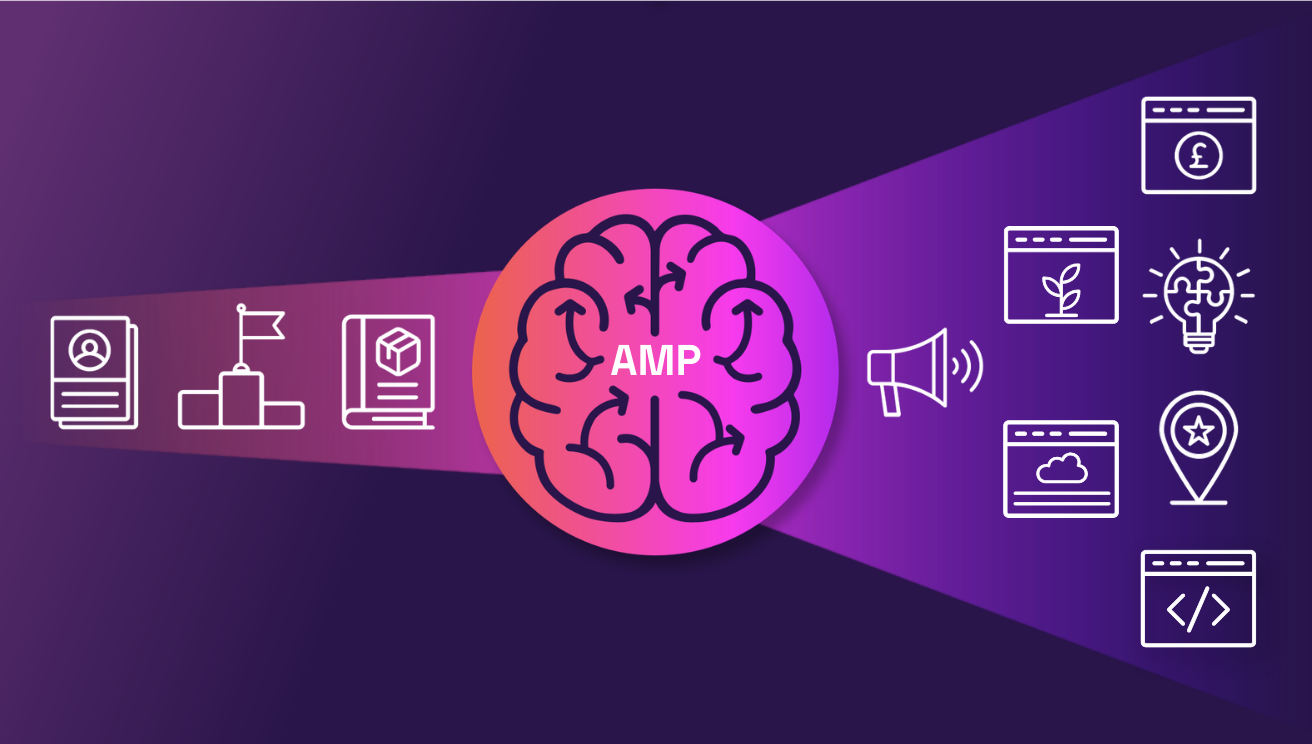
A marketing brain is not a platform you buy. It is a system you build. Specifically, it is the three operational layers that make AI execution consistent without starting from scratch every week.
AI exposes gaps in how brands are managed at scale. Prompts help, but prompts alone don’t create consistency - you need a system behind them.
The system has three components.
Memory - The Context Layer That Never Resets
The memory layer is the persistent foundation your AI always draws from. It is not a style guide (a static document that describes how things should be done). It is an active, structured set of positioning decisions that feeds every content creation session automatically.
A complete brand memory system contains:
- Positioning decisions - the single-sentence answers to "what we do", "who for", "why us", and "why now"
- ICP profile - specific, validated, not demographic averages
- Key objections and approved responses - the actual language that closes deals
- Proof points - specific, cited, version-controlled, and approved by legal
- Approved language blocks - phrases and constructions that are always/never used
- On-brand vs off-brand examples - real content that demonstrates the standard
This memory layer is not static. It should be reviewed quarterly, or after any significant positioning shift. The brands that treat initial memory capture as a one-time event will find it degrading over time as the market, the product, and the team all shift around a set of decisions that no longer reflect reality.
At Jam 7, the memory layer is the foundation of every engagement of our Agentic Marketing Platform® (AMP). The 30-day deep discovery process that opens every client relationship is, at its core, memory capture - building the persistent context that makes everything downstream faster, more consistent, and more authentic.
QA - The Checks That Catch Drift Before It Compounds
The QA layer is where brand drift is caught before it becomes a pattern. It is not a compliance function or a legal review process. It is a structured set of checks applied to content before it is approved, designed specifically to detect the early signals of consistency failure.
A content QA system for a B2B marketing team should check for:
- Claims accuracy: Are the proof points cited and version-controlled? Has anything been overstated or softened?
- Differentiation integrity: Does this content make Jam 7 (or your brand) sound genuinely different from competitors, or could any agency have written it?
- Voice fidelity: Does this sound like the brand, or does it sound like the AI's interpretation of the brief?
- Positioning alignment: Does this content reinforce the current positioning decisions, or does it inadvertently contradict them?
- Objection handling: Does this content address the real objections the sales team encounters, or does it stay safely in territory that sounds impressive but closes nothing?
The QA layer is what makes consistency operational rather than aspirational: it catches claim drift, positioning drift, and voice drift before they ship - so inconsistency doesn’t compound.
Governance - The Rituals That Keep the System Current
Governance is the layer many teams under-invest in, and it determines whether your marketing brain compounds in value or quietly decays.
Governance is not rules. Rules are what you write in a document that nobody reads. Governance is rituals: defined ownership, regular cadences, and clear accountability for keeping the memory and QA layers current.
A functioning governance layer answers these questions:
- Who owns each artefact in the memory layer? (Not a team - a person with a name)
- What is the review cadence? (Positioning: quarterly. Proof points: after every case study. Approved language: annually minimum)
- What triggers an emergency update? (Major product change, funding round, significant competitive move, regulatory shift)
- Who has authority to approve a change? (And who is informed, not just the approver?)
- What is the acceptance test for a new piece of content? (The checklist that every piece must pass before it ships)
Without governance, your memory layer becomes a historical document rather than a living system. Without governance, your QA layer gets skipped when deadlines tighten. Without governance, the marketing brain you built in month one is effectively retired by month six - and nobody noticed because it happened gradually.
BCG, writing via Medium in 2026, framed it perfectly: "Without governance, automation multiplies noise faster than insight. Human checkpoints are not bureaucracy - they are calibration." Teams with clear governance ship faster with fewer reversals, because decisions stay current and reusable.

The Minimum Viable Marketing Brain (30 Days)
The most common objection to building a marketing brain is scope. It sounds like a large project - one that requires a consultant, a lengthy discovery phase, and a full-team commitment before anything changes.
It does not have to be. The minimum viable marketing brain can be operational in 30 days. The goal is not perfection. It is a working system that creates compounding consistency from day one.
Days 1–10: Capture the Memory Layer
This is the input phase. Output: five artefacts drafted, reviewed, and approved (not “in progress”).
- A single-page positioning brief (what you do, who for, why you, why now)
- An ICP profile that reflects your last 10 closed-won deals, not your founding hypothesis
- A 10-point objection library with approved response language
- A proof point register with citations and approval status
- An approved language document: 15 phrases always used, 10 never used
Days 11–20: Build the QA Checkpoints
This is the process phase. Output: QA checklist in use + baseline “first draft passes QA” rate recorded.
- A content QA checklist (claims, differentiation, voice, positioning, objections - each with a binary pass/fail)
- A first full QA review cycle run on existing published content
- A documented list of the inconsistencies found - these become your first governance agenda
Days 21–30: Define the Governance Rituals
This is the accountability phase. Output: named owners + next two review sessions booked on the calendar.
- A named owner for each memory artefact
- A quarterly review calendar with pre-booked sessions
- A "first draft passes QA" rate tracked from week one
- A scheduled monthly check-in on governance effectiveness
The system does not need to be sophisticated to work. It needs to be written down, owned, and used consistently. That is what creates compounding.
What to Measure: Leading Indicators of Operational Consistency
Most B2B marketing teams measure brand consistency through lagging indicators: NPS, brand recognition studies, win rates. These are valuable - but they move on a 6–12 month lag. By the time they signal a problem, the damage has been compounding for quarters.
Leading indicators give you signal in real time. Here are four strong starting points, tailor them to your publishing cadence and team size:
| Leading Indicator | What It Measures | Target Direction | Why It Matters |
|---|---|---|---|
| Revision cycle count per piece | How many rounds of edits content requires before approval | Declining | Falling revision cycles mean QA is catching drift earlier, and the memory layer is producing more accurate first drafts |
| Time-to-first-approved-draft | How long from brief to an approved first draft | Declining | Faster first drafts signal that the memory layer is working - AI is drawing from accurate context rather than averaging |
| Approved content block reuse rate | How often pre-approved language blocks appear in new content | Rising | Higher reuse means governance is working - the team is drawing from the system rather than reinventing language each time |
| Sales re-briefing frequency | How often Sales asks marketing to re-explain positioning or update messaging | Declining | Fewer re-briefings signal that marketing content is doing its job - Sales has what it needs, and it is consistent with what they are hearing from prospects |
Tracking these four indicators weekly creates an early warning system that operates months ahead of the brand recognition and win rate data your board sees quarterly. It also creates the operational evidence that marketing's consistency investment is working.
The Difference Between a Marketing Tool Stack and a Marketing Brain
How do you build brand consistency AI into a marketing brain?
Brand consistency AI doesn’t come from a clever prompt - it comes from architecture. You need shared memory retention (positioning, proof, approved language), repeatable QA checks, and governance that keeps artefacts current. Without that operating system, marketing campaigns drift by channel, and consumer behaviour data can’t compound.
| Dimension | AI Tool Stack | Style Guide | Marketing Brain |
|---|---|---|---|
| Memory | None - every session starts blank | Static document - describes but does not feed | Persistent, structured, actively fed into every session |
| QA | None - output is unverified | None - reference only | Structured checklist applied before every piece ships |
| Governance | None - no update cadence | Updated when someone remembers | Named owners, defined cadence, clear accountability |
| Consistency | Varies by session and prompter | Varies by who read it last | Systematic - compounds over time |
| Scalability | Scales output, not quality | Does not scale | Scales both output and quality simultaneously |
| What it produces | Fast content | A reference that’s often not operationalised | A consistent, compounding brand voice |
As Hendry.ai put it in 2026: "AI marketing tools don't fail because the AI is 'not good enough'. They fail because teams treat tools like shortcuts instead of systems."
A style guide is a reference document. A tool stack is a production engine. A marketing brain is what connects them - the persistent intelligence layer that makes your production engine produce consistent output, at speed, without starting from scratch every time.
This is the Consistency pillar of Jam 7's Growth Quadrant. Speed (the X-axis of the quadrant) gives you production velocity. But Consistency (the Y-axis) is what determines whether that velocity builds authority or erodes it. A marketing brain is where Speed and Consistency work together to unlock Scale and Credibility simultaneously.
If Marketing Keeps Repeating Itself, Positioning Isn't Operational
The signal that you need a marketing brain is not dramatic. It is subtle. It is the feeling that your team is working hard but not compounding. That each week's content is roughly as good as last week's - but not better. That the brief for this month's campaign sounds suspiciously similar to the brief from three months ago.
This is what happens when positioning exists as a document rather than a system. The knowledge lives in a PDF on a shared drive, or in the heads of the three people who were in the room when the strategy was agreed. It does not feed automatically into the tools your team uses every day. So every campaign is, to some degree, a renegotiation of decisions that were already made.
A marketing brain ends this cycle. Not by adding more process - by building a system that makes the right decisions the default. Memory so your AI always draws from the positioning you agreed. QA so drift is caught before it ships. Governance so the system stays current as your market, your product, and your team evolve.
Marketing doesn't need more tools. It needs a brain. And the good news is that the minimum viable version can be built in 30 days - with the memory, QA, and governance layers in place before the next campaign brief lands.
Many teams are increasing output with AI, but still struggling to keep voice and positioning consistent. A marketing brain closes that loop.
If you want to build a marketing brain that makes your AI execution consistent, compounding, and authentically yours - book a Market Positioning Canvas Workshop with Jam 7.
Ready to Stop Starting from Scratch Every Week?
We will audit your current consistency infrastructure, identify your biggest governance gaps, and show you how to build a marketing brain that compounds authority over time.
Your competitors are answering. Are you?
Get your prioritised growth audit in 5 minutes. See exactly where you're losing trust, and how to win it back with Speed, Scale, Consistency, and Credibility.